Andrew Royle
Milepost 92½
Andrew Royle
Milepost 92½
|
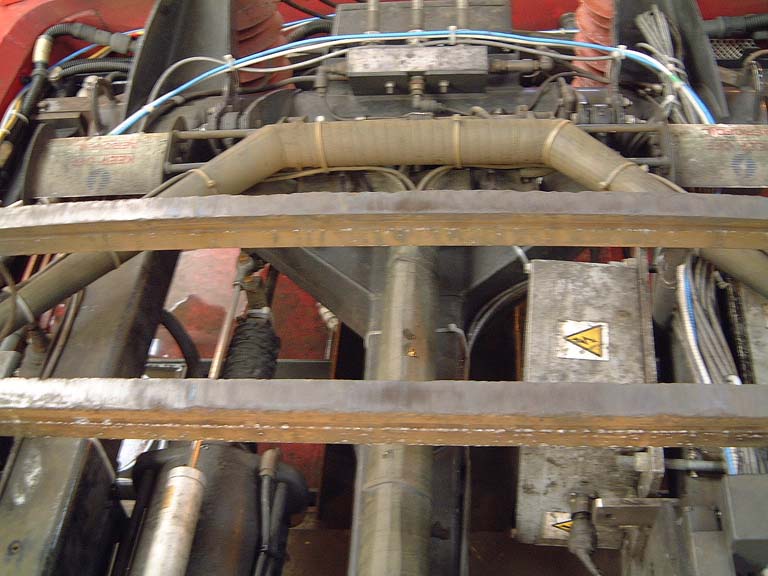
Although the author was not directly involved with the testing & commissioning of these units other than a spell at the Old Dalby test track and a few visits to Oxley CS in connection with the pantograph instrumentation, a number of Serco engineers were involved in particular with high speed pantograph testing. |
Old Dalby test track
|
All of the Pendolinos were commissioned and tested at the test track prior to being delivered. Alstom negotiated with Serco Railtest in order to take over the lease and electrified the track in 2000. Unfortunately, due to a number of circumstances, Alstom no longer build trains in the UK hence the test track was made redundant and it looked at one point as if it might be closed altogether. However in February 2007 Metronet, one of the two London Underground operators (now LUL) took over the lease and electrified a few kilometres from Old Dalby to Folly Hall with the 3rd and 4th rail systems so its future now seems assured - at least until 2015. Click on the picture for a bigger image - pictures are the author's unless otherwise credited |
|
|
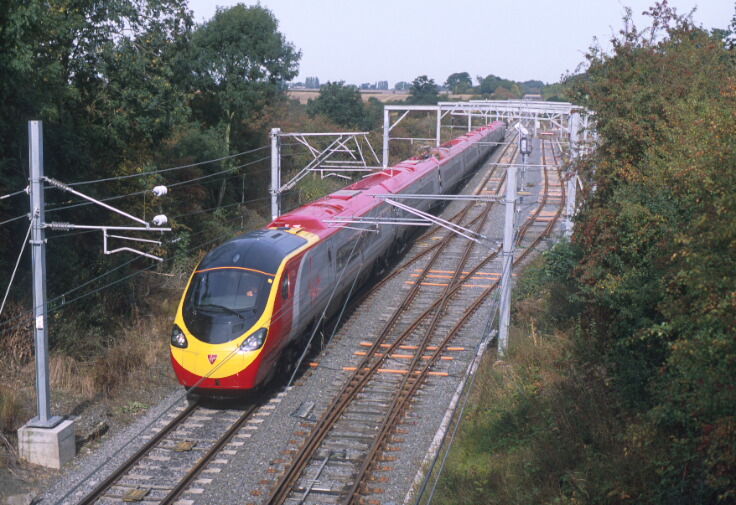
On 16th July 2001, a
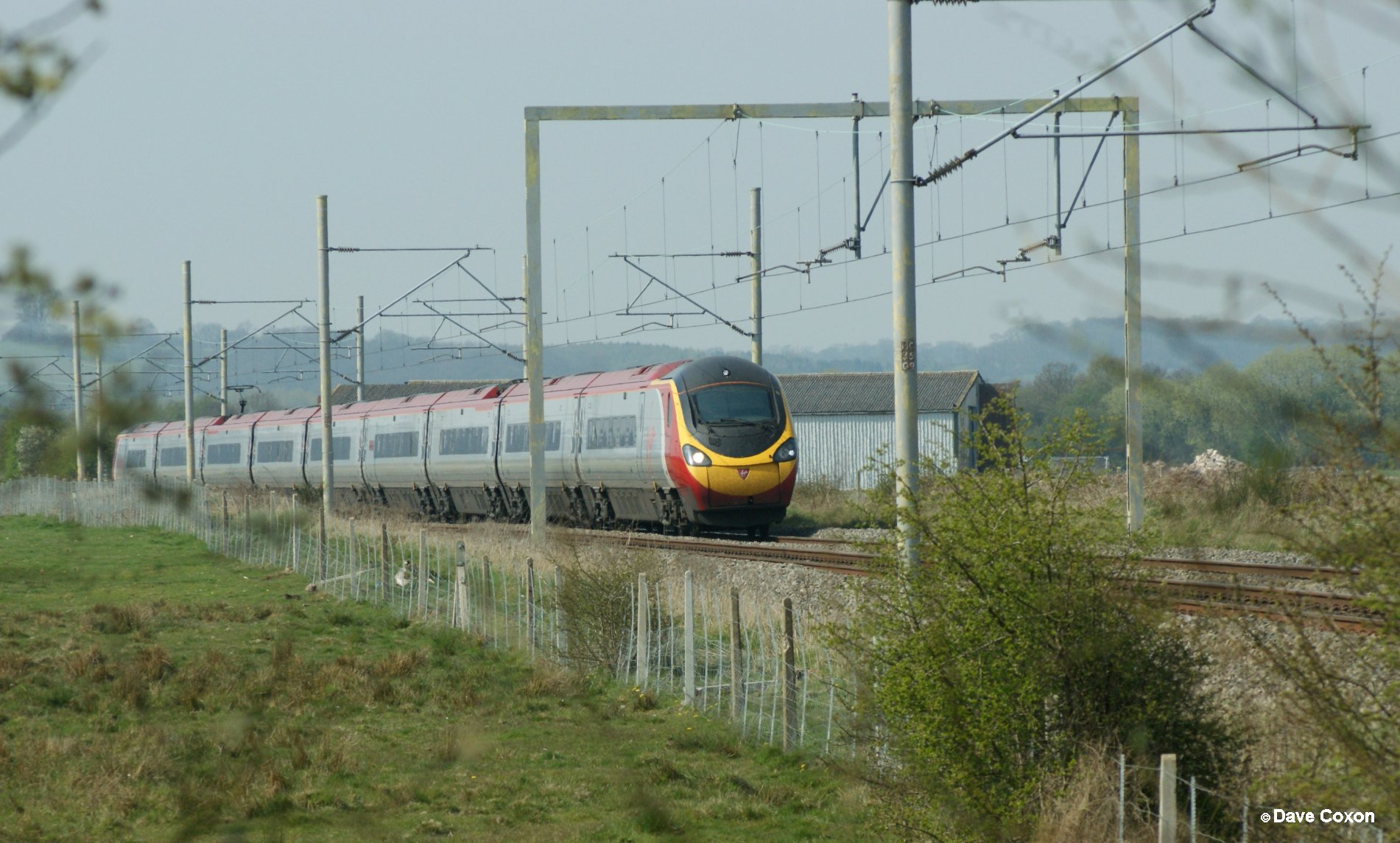
Class 390 'Pendolino' heads north through the curves approaching
Plumtree, with the A606 Nottingham to Melton road in the background.
Andrew Royle |
|
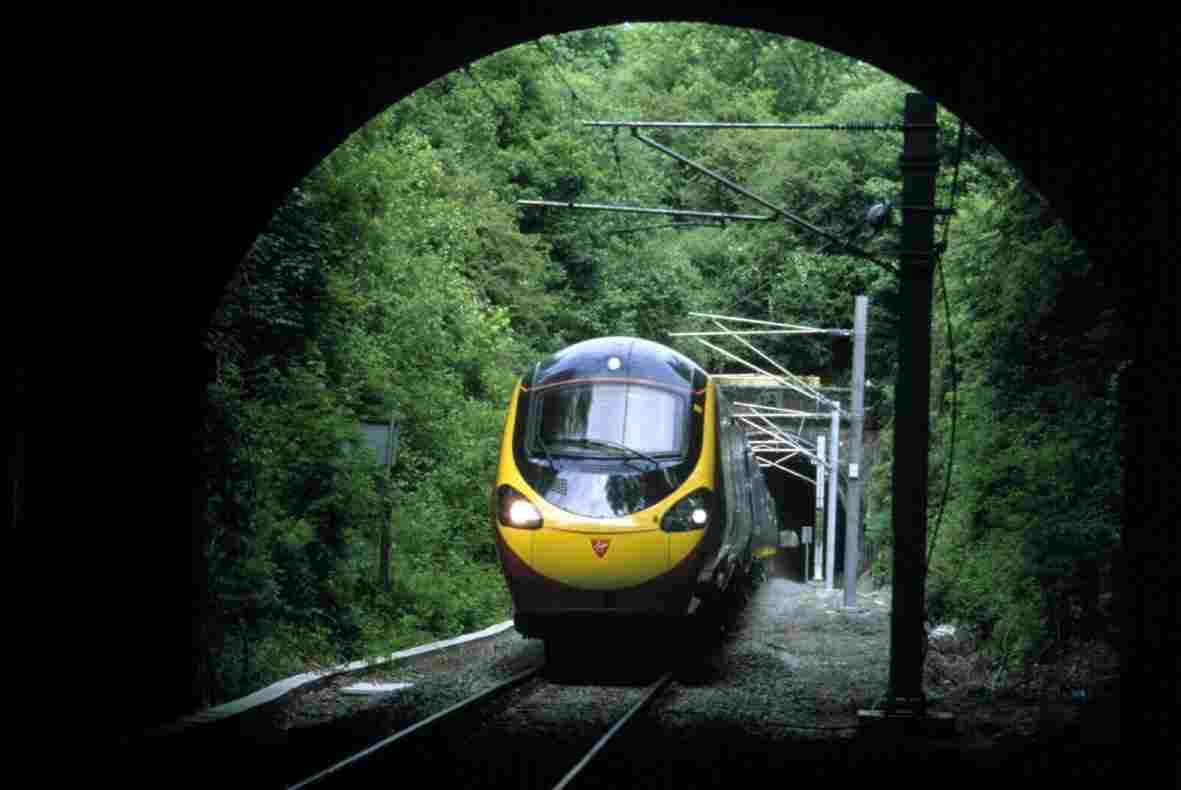
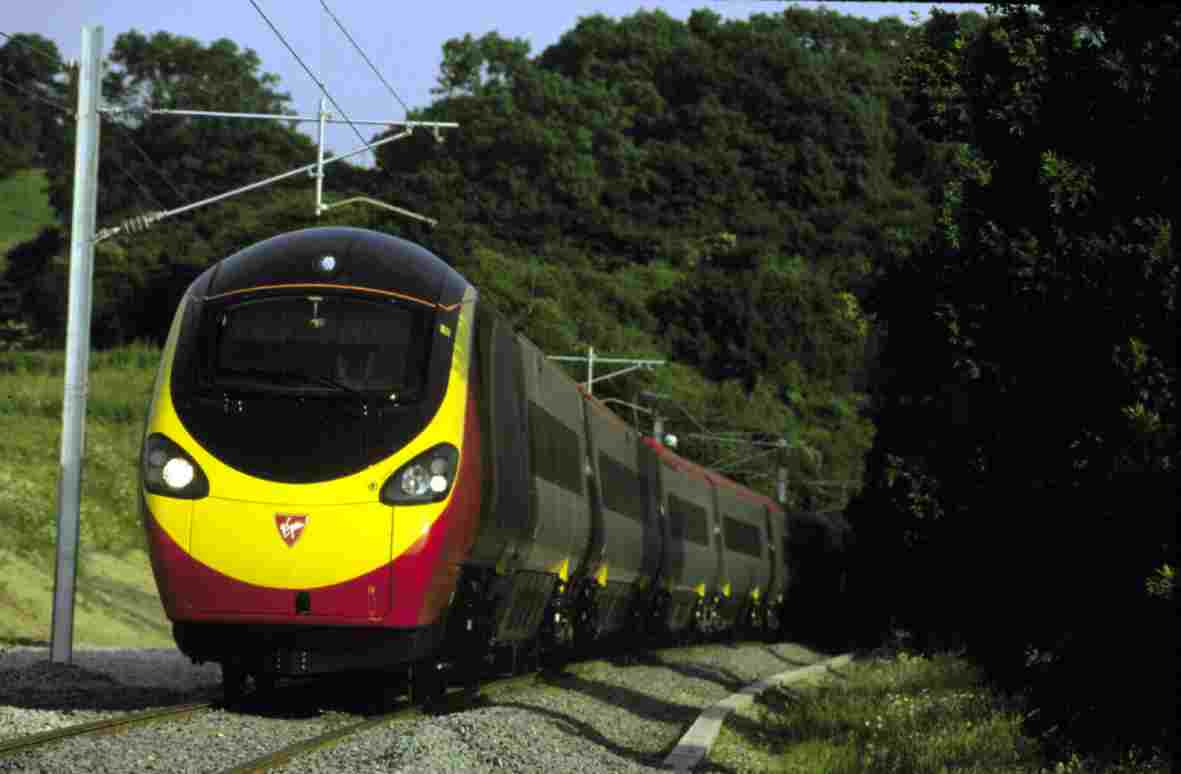
In the summer of 2001 Pendolino set No PS02 approaches Grimston Tunnel on a northbound trip Milepost 92½ |
|
|
In early September 2003 Pendolino No: 390031
'City of Edinburgh' heads south away from Widmerpool station past the
crossings at 115 MP which connect the two running lines. Andrew Royle |
|
Set No PS02 leaves Grimston
Tunnel on a northbound trip in 2001 Milepost 92½ |
|
|
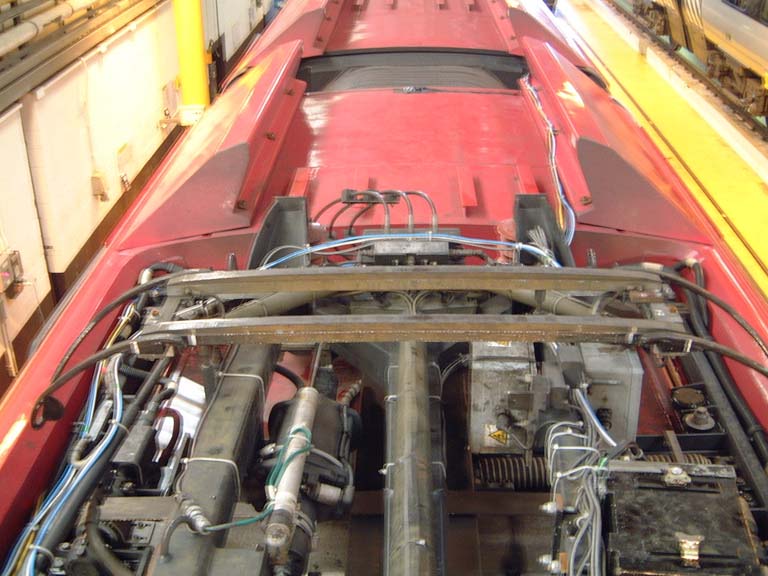
A view of the instrumented BR/Brecknell Willis pantograph on set PS02 in the workshop at Asfordby on 3rd April 2004 |
|
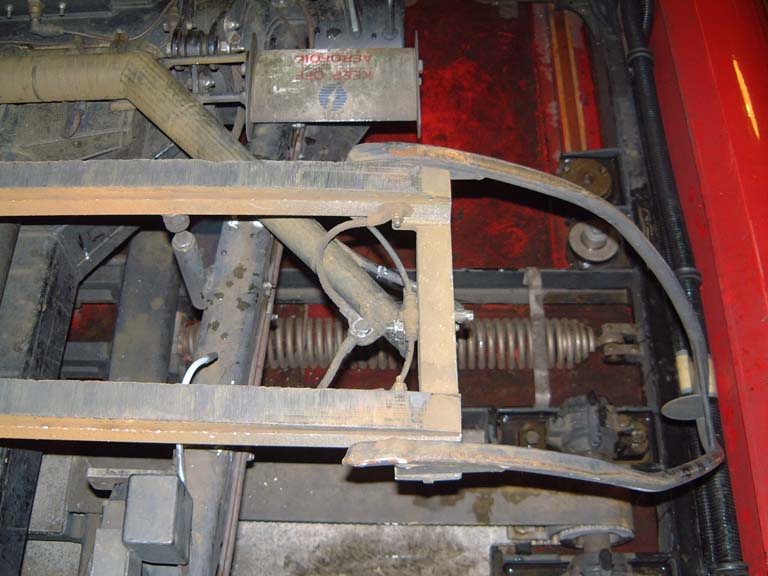
A closer view of the horn assembly - note the aerofoils with their warning notice and the Brecknell Willis logo |
|
|
This view shows the telemetry system and the potentiometer alongside the operating cylinder on the left. | ||
WCML on test
|
A number of tests were conducted between Carnforth and Carlisle on a stretch of line known as 'Test Site 'A' .The line had been especially prepared for 'Enhanced Permitted Speed' (EPS) trials and was suitably signed. Later the route would be fitted with the TASS balises which controlled the tilt and speed of the Pendolinos (and Voyagers). The tests usually took place over a weekend on Saturday night. It was often necessary to combine these trials with the class 221 unit (221101) as possessions of the WCML were at a premium. Later a number of driver training runs were also undertaken over this route. Click on the picture for a bigger image - pictures are the author's |
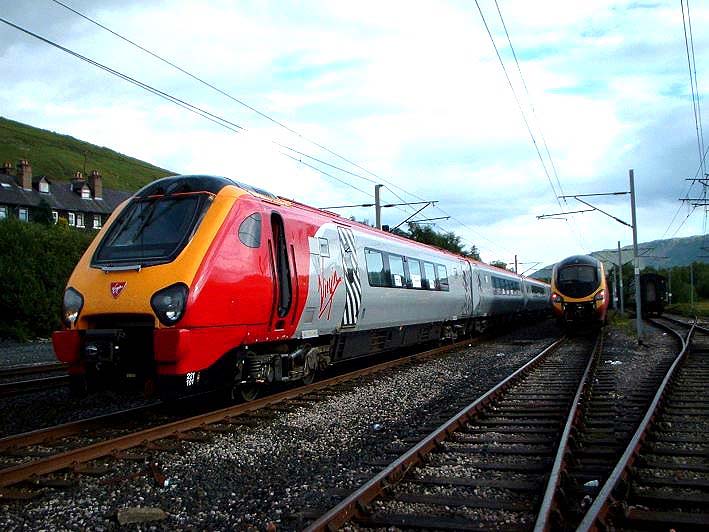 |
On Saturday afternoon 20th July 2002 at Tebay, 221101 stands on the Down Line waiting permission to enter the sidings where the Pendolino is already stabled. |
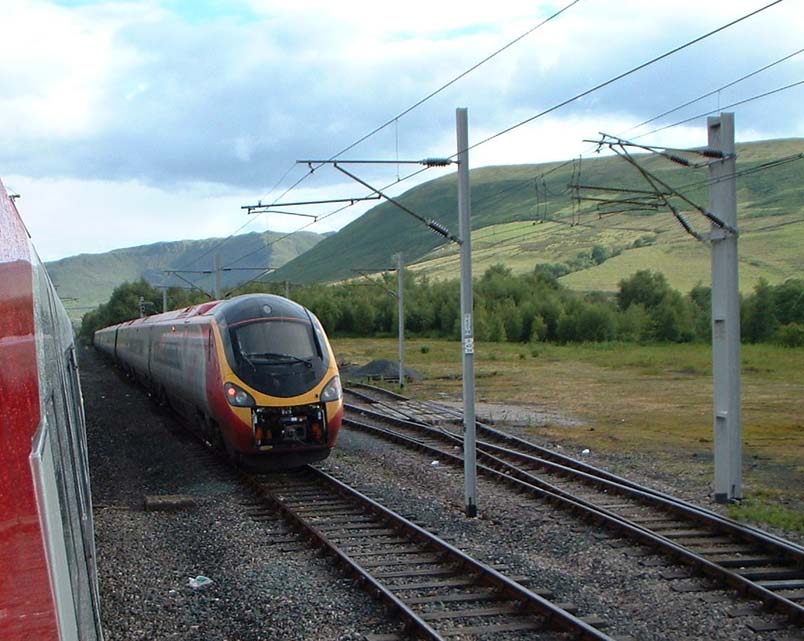 |
A view from the cab of the 221 |
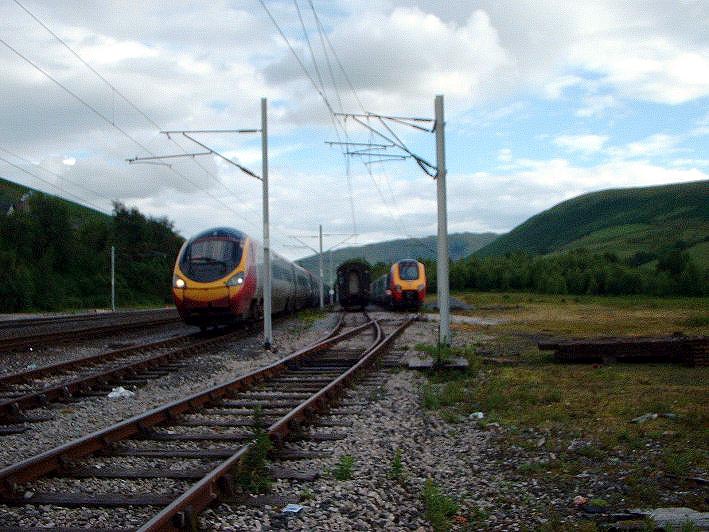 |
The Pendolino and 221 are seen here stabled ready for the testing. The coach in between is one of the Pendolino's match vehicles. At this stage the Pendolinos were not allowed to operate under their own power outside of the possession and were therefore loco-hauled to site. | ||
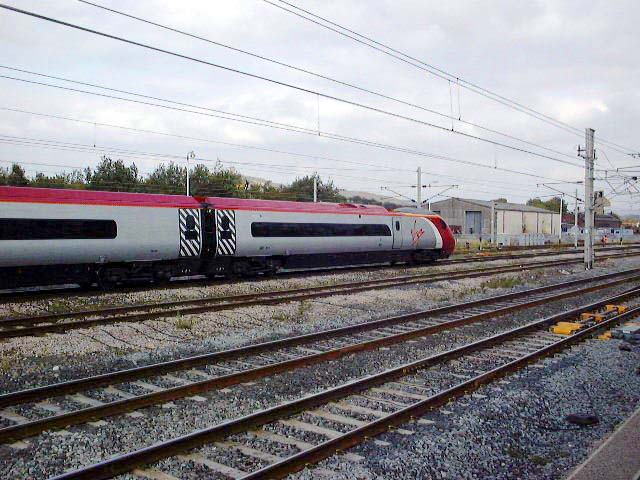 |
An unidentified set leaves Carnforth on a driver training run to Carlisle on 10th October 2002 |
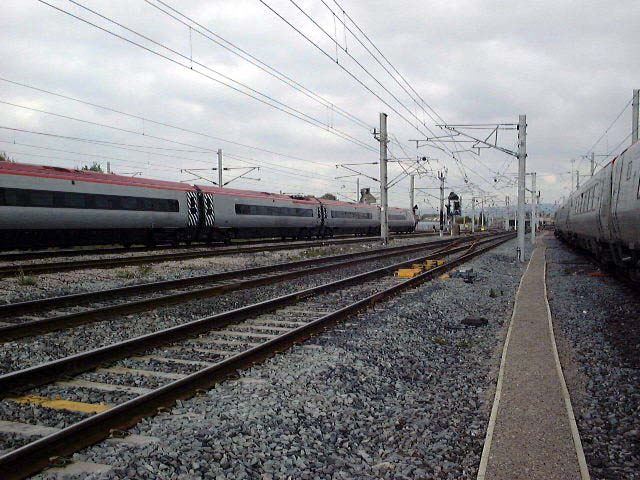 |
In this shot at Carnforth on 10th October 2002 unit 221101 is stopped in the Up Loop as the Pendolino departs for Carlisle. |
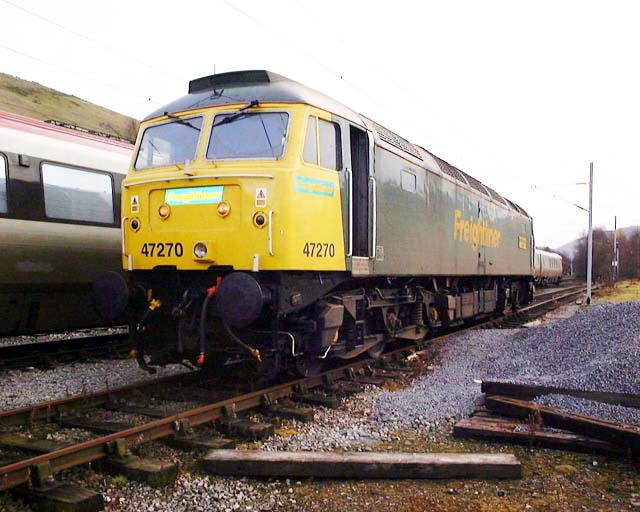 |
47270, which brought the Pendolino to site, is shown stabled in the sidings at Tebay on 17th November 2002. These locos were often used for a 'proving run' prior to operation of the Pendolino. | ||
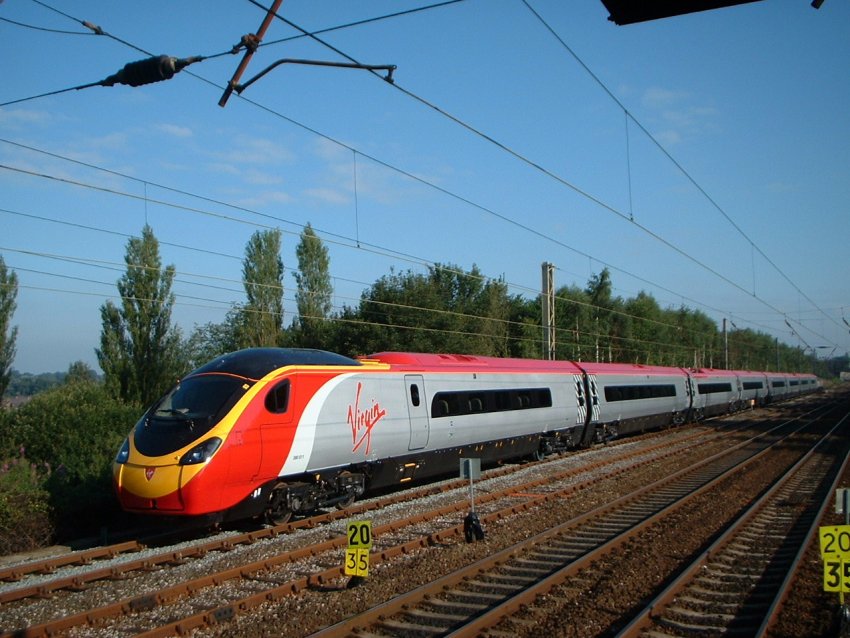 |
Set 390002 waits on the Slow road south of Preston in connection with its naming ceremony on 4th August 2002 |
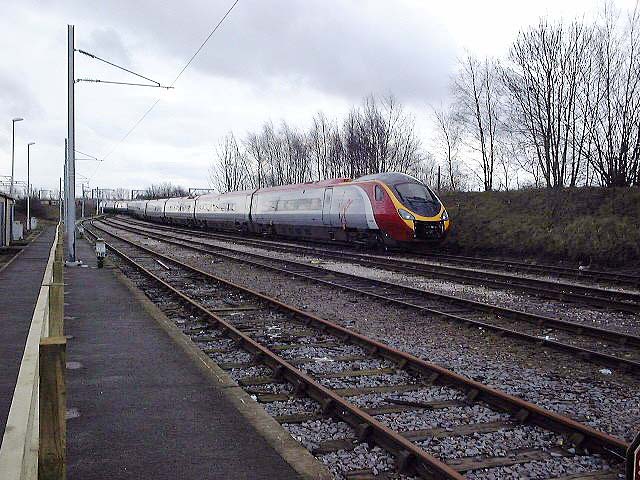 |
Set PS1 at Oxley Carriage Sidings on 1st March 2003 during the high speed pantograph tests between Stafford and Crewe |
In service
|
The fleet was introduced into passenger service in mid 2002 to coincide with the opening of the 2002 Commonwealth Games in Manchester although the trains did not tilt at first. This was for two reasons, the tilt system was still undergoing testing and the track was not yet cleared for higher speeds, nor fitted with the TASS balises. There was also the on-going problems associated with the high traction demand and return currents for which the WCML was not quite ready at that stage. By 2004 the units had started to operate services to Glasgow Central, and by the end of summer, in theory, all services north of Preston were worked by Class 390 units. By the middle of 2005, Pendolinos were operating the majority of services throughout the WCML and today operate all services. Bar one - after the demise of the set involved in the Grayrigg derailment a rake on Mk3s and DVT were re-furbished and painted in Virgin Pendolino livery. the set is referred to as the 'Pretendolino' and is used on fill-in turns hauled by a class 90. Click on the picture for a bigger image - pictures are the author's |
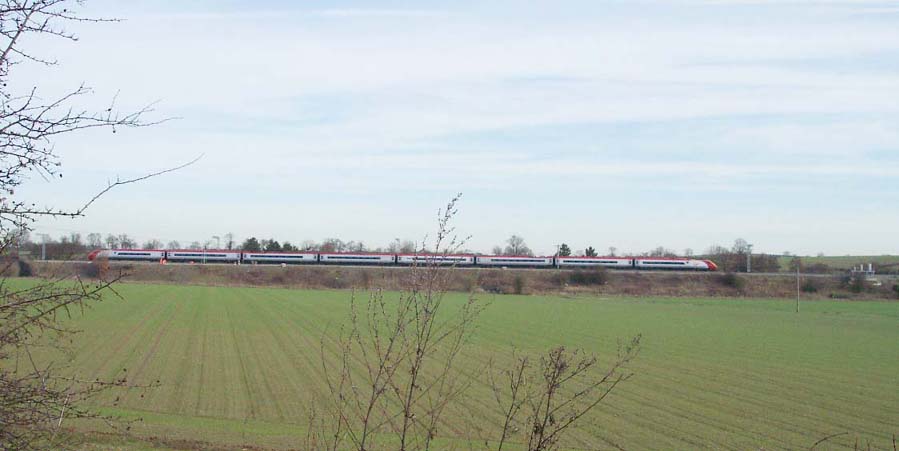 |
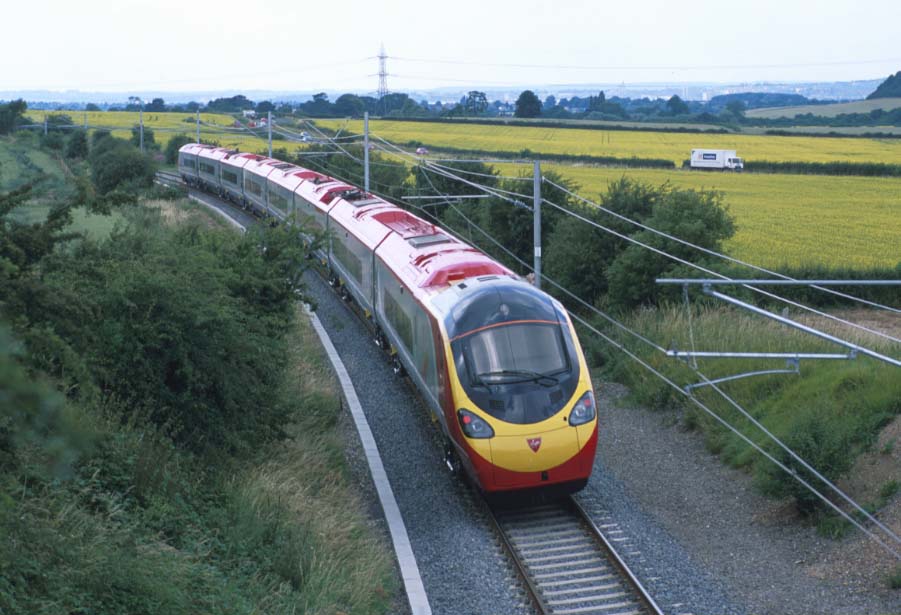
In this shot the full length of an 8 car Pendolino set can be seen as it heads south near Weedon at 11.30 am on 9th February 2004. Later the Pendolinos were made up to nine vehicles and plans are afoot to extend them to 10 or eleven vehicles. | ||
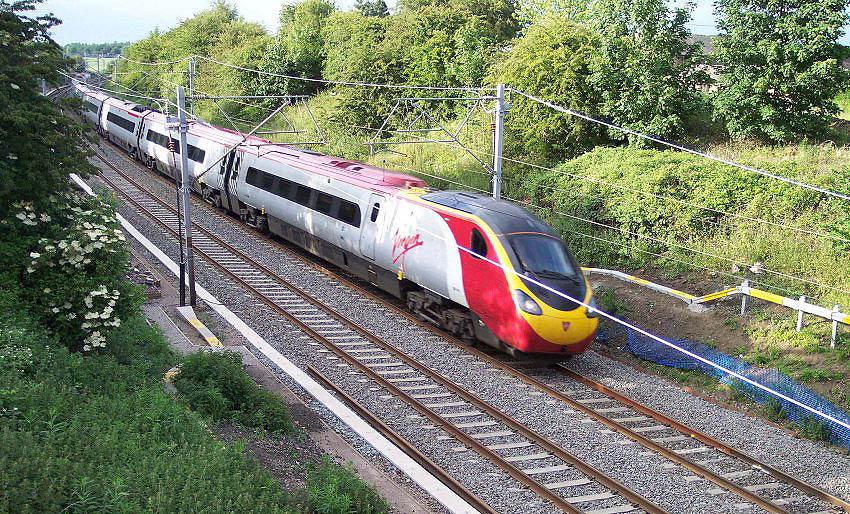 |
An unidentified set heads for Euston at Dodford Road north of Weedon on 17th June 2005 |
|
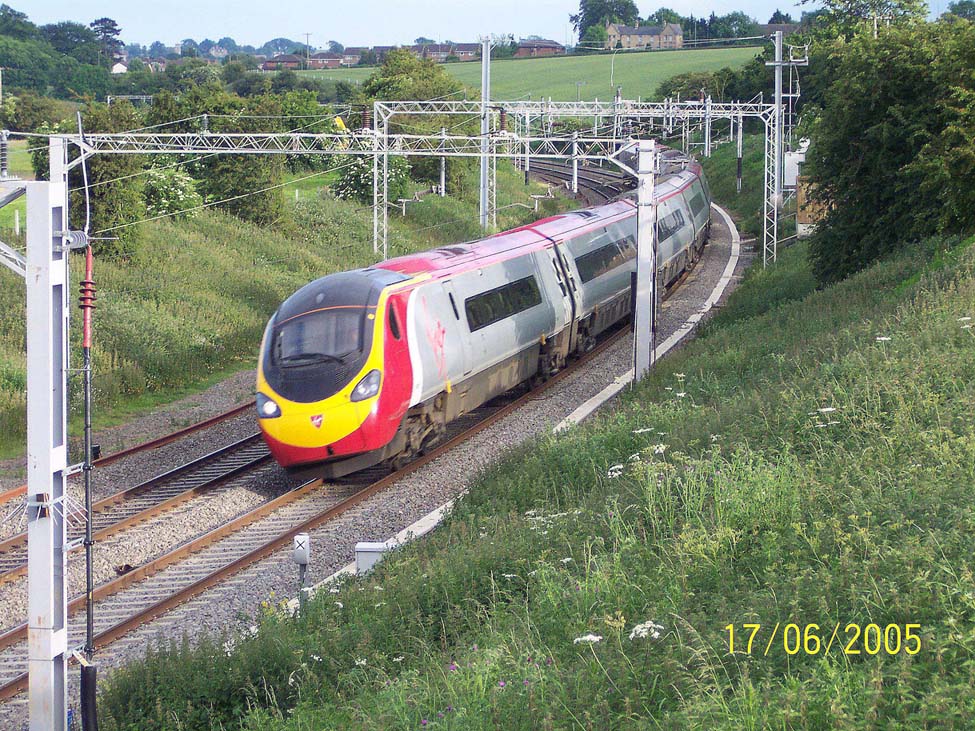
Another set rounds the curve northbound on 17th June 2005 |
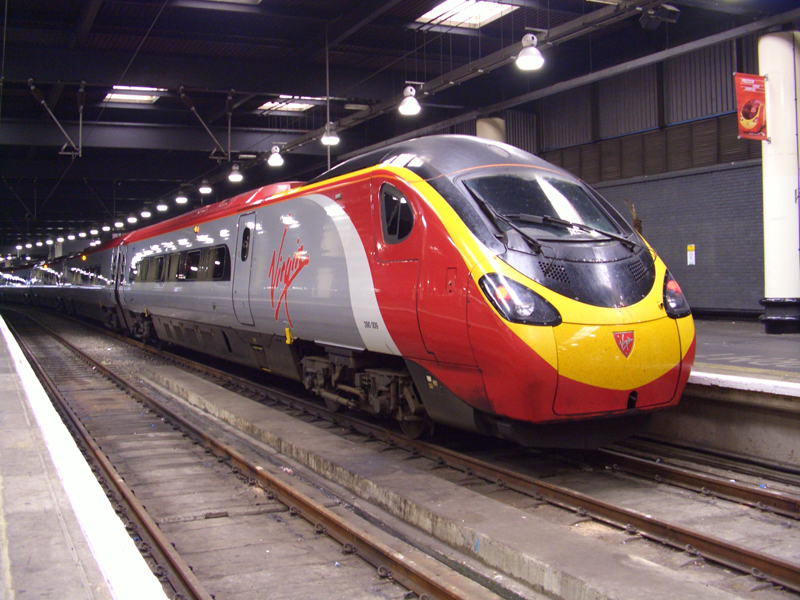 |
390009 sits at the stops in Euston station on 7th October 2005 |
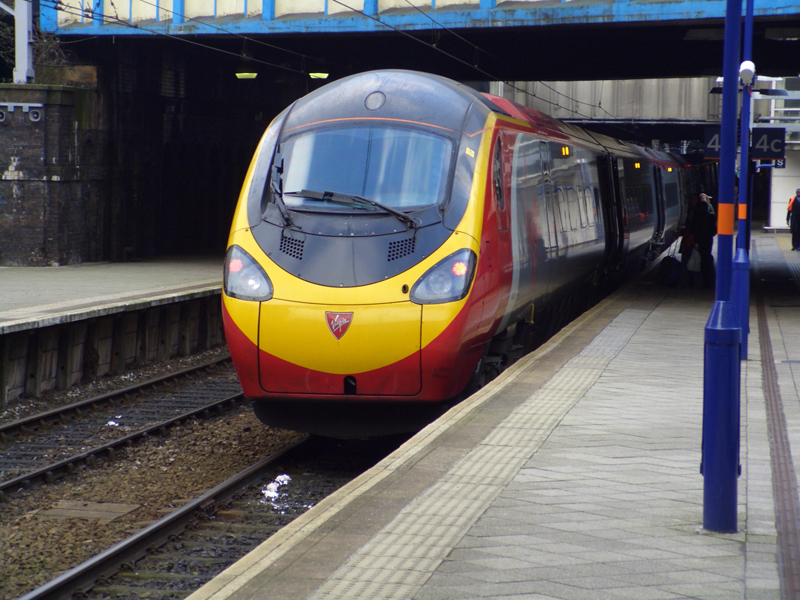 |
390013 waits at Birmingham New Street with the 11.00am departure for London on 20th February 2006 |
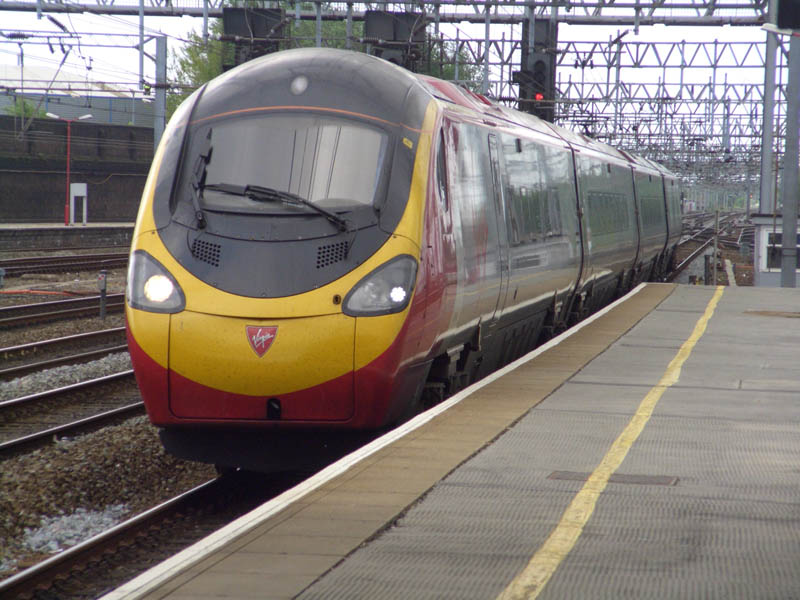 |
Unidentified northbound class 390 arrives at Crewe on 18th May 2006 |
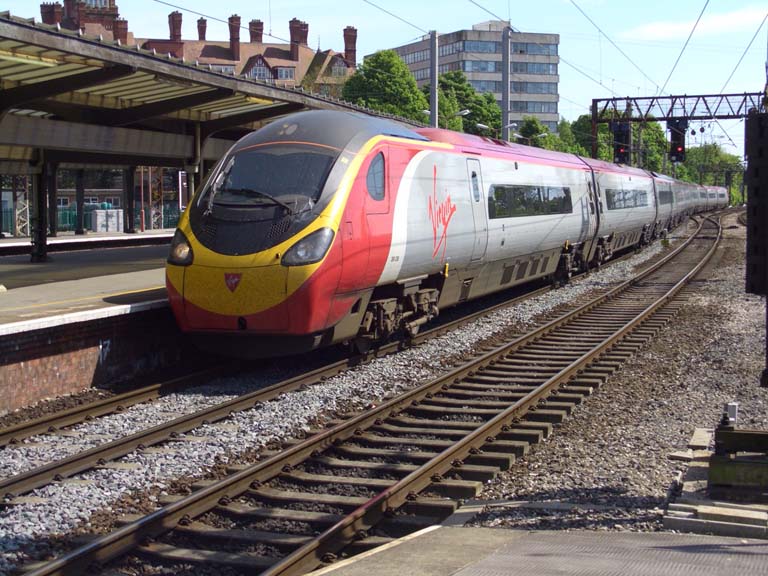 |
390036 enters platform 3 at Preston with a service for Lancaster on 25th May 2006 |
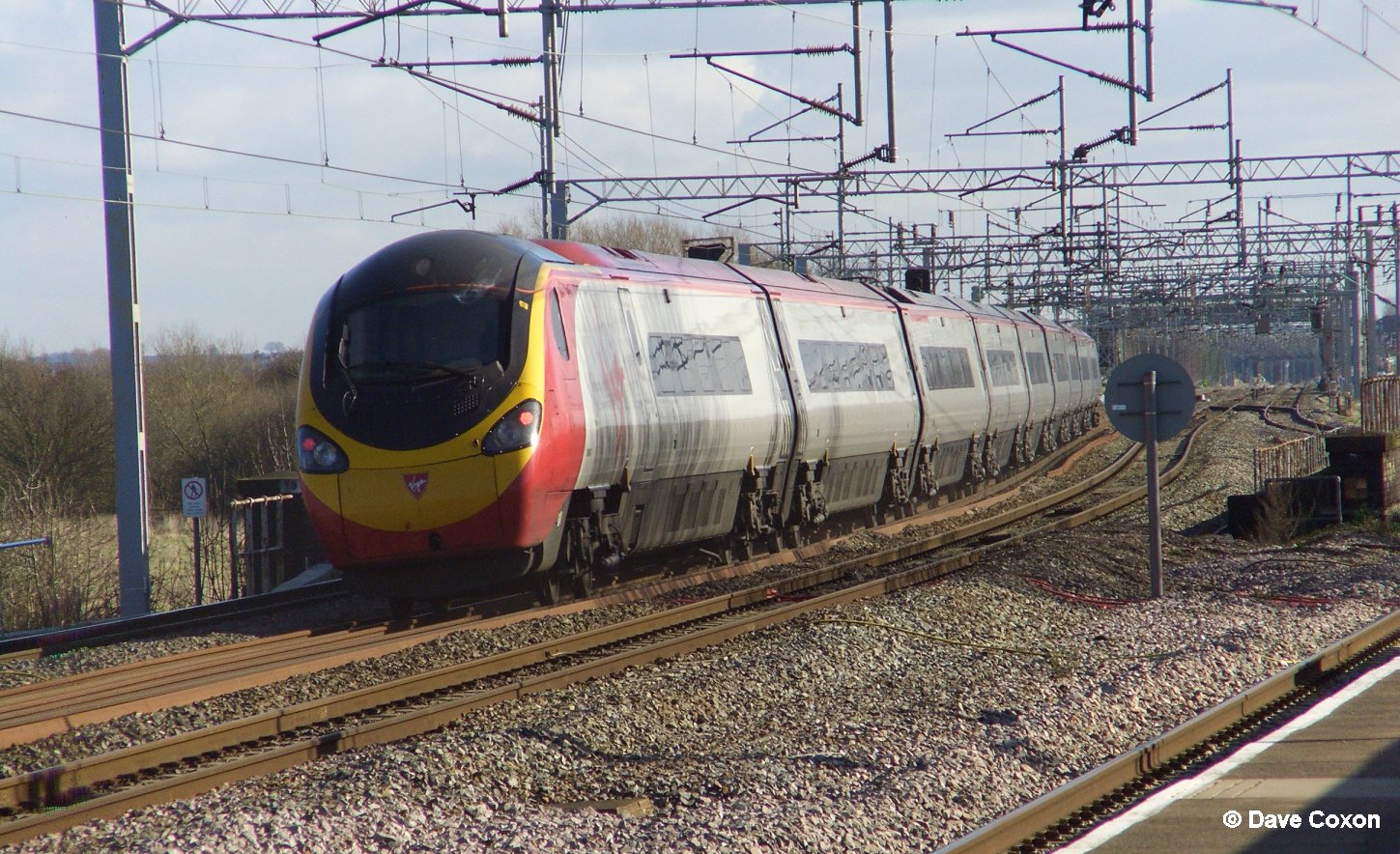 |
Heading south away from Tamworth station on 27th February 2008 |
|
Approaching the site of Hixon LC on 23rd April 2010 |
|
The Pretendolino Following the loss of a Class 390 Pendolino in the Grayrigg derailment, a Mark 3 set with a Mk3 DVT was leased with a Class 90 hired from EWS as motive power. Nicknamed the 'Pretendolino', this received re-upholstered seating, power points, wi-fi and a full external re-paint at Wabtec, Doncaster in 2009 Click on the picture for a bigger image - pictures are the author's |
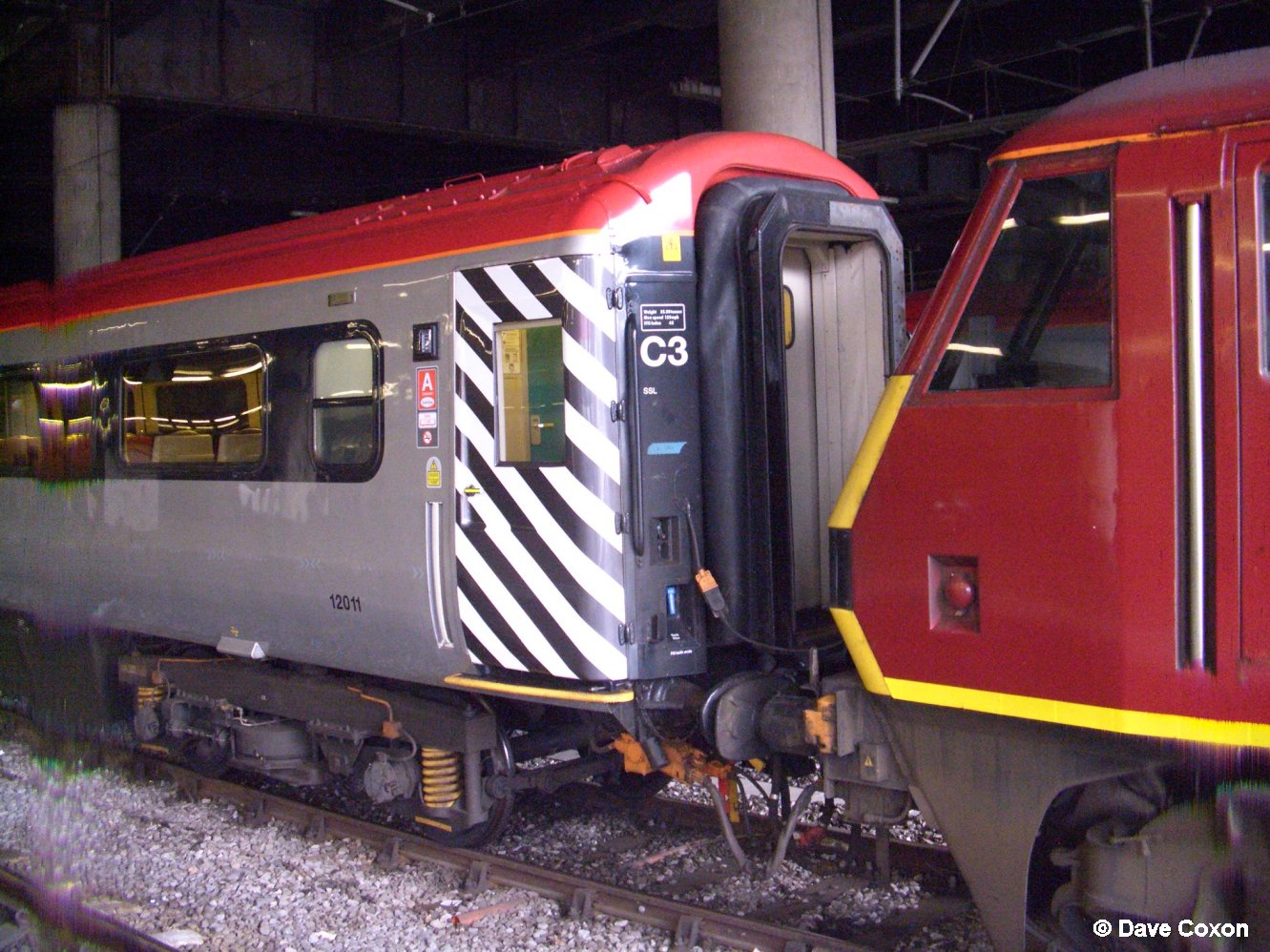 |
90029 shown coupled to the leading Mk3 of the Pretendolino at Euston on 14th August 2009 |
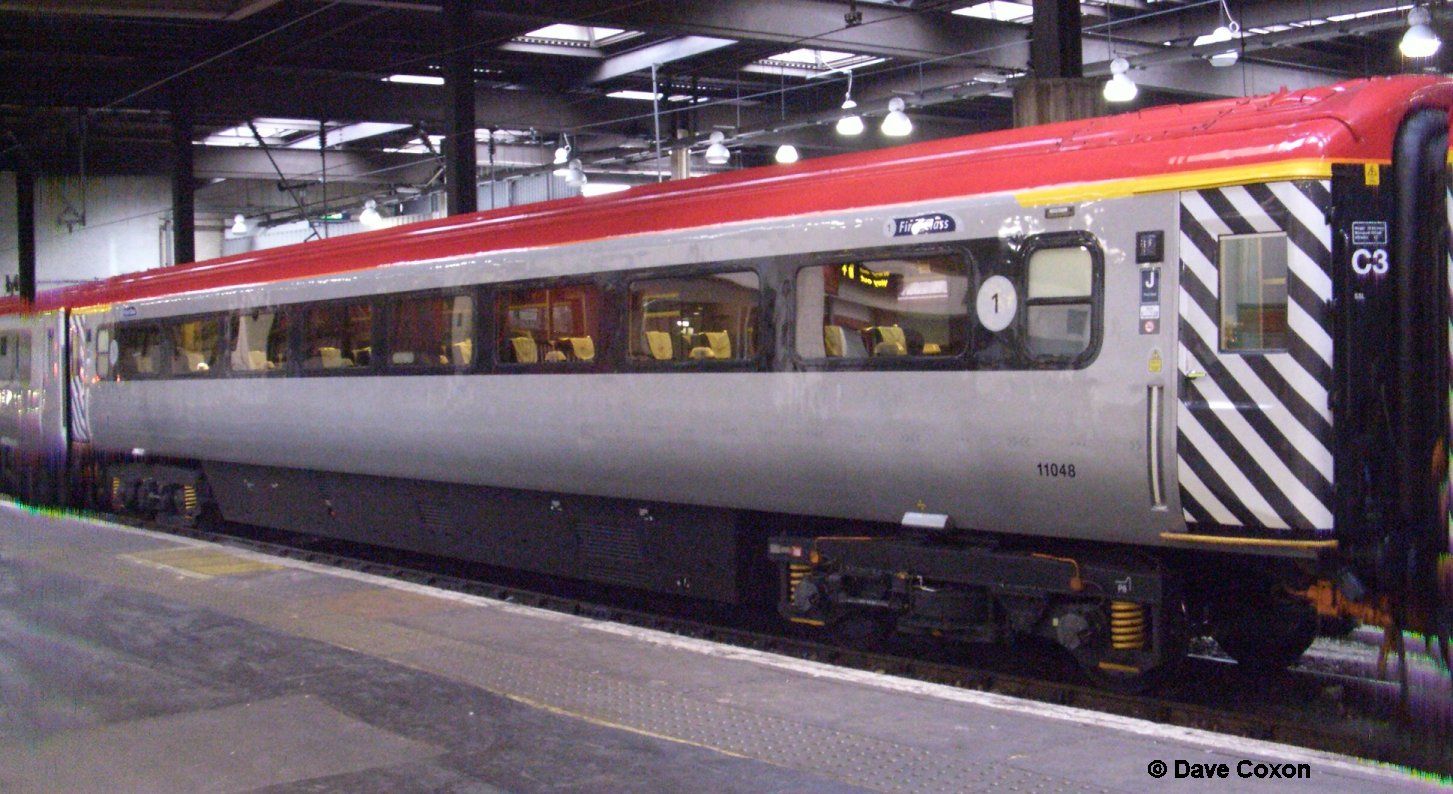 |
FO in red and silver - Euston 14th August 2009 |
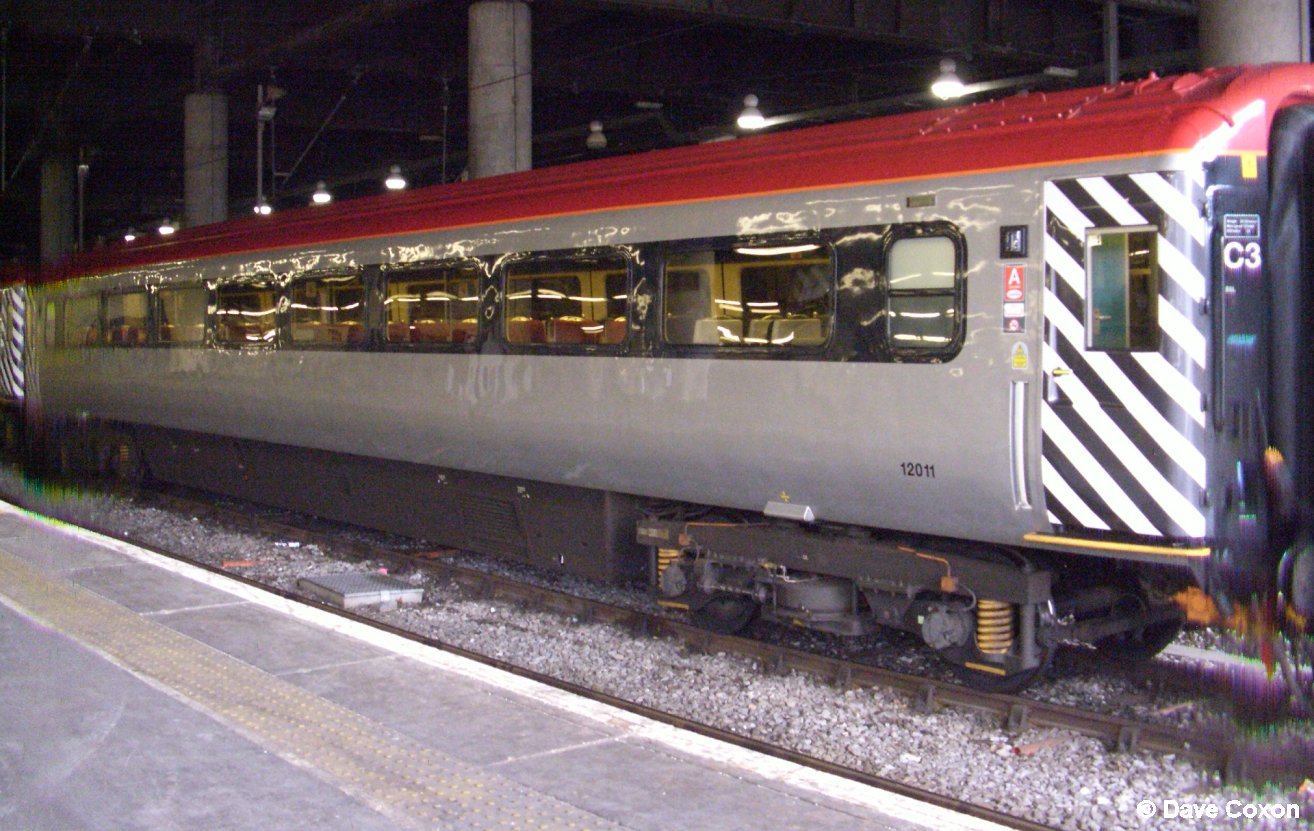 |
SO in red and silver - Euston 14th August 2009 |
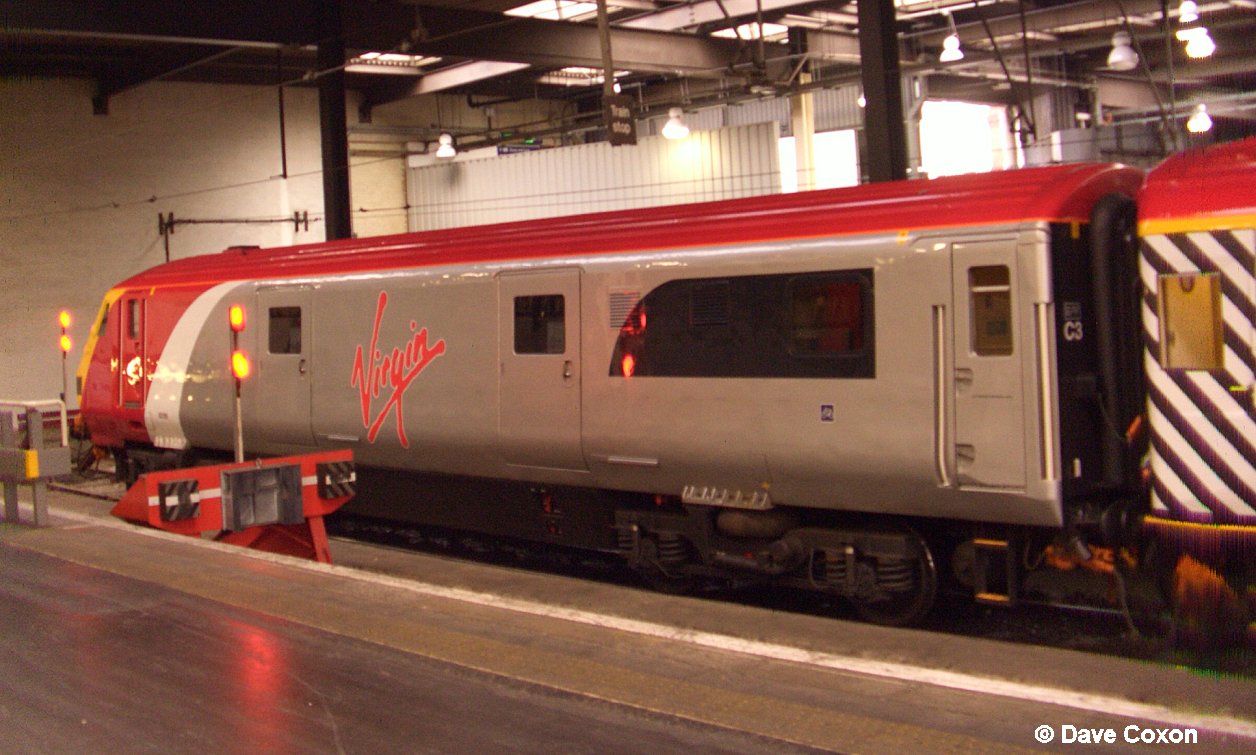 |
DVT 82126 at the buffers in Euston on 14th August 2009 |
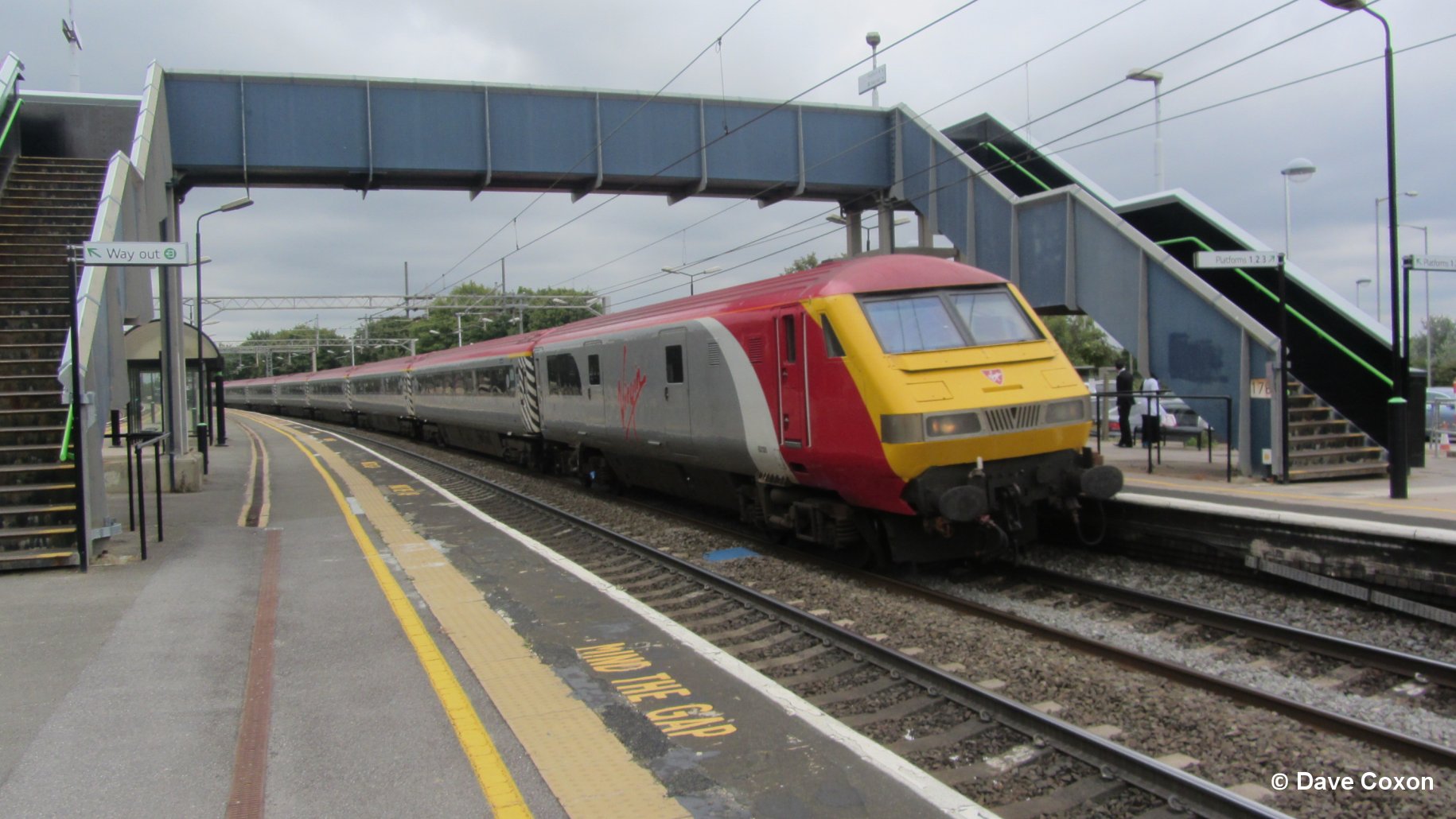 |
DVT 82126 heads south through Wolverton on 21st September 2012 | ||
It was made redundant from WCML in 2014 but has found a new home on the Liverpool St - Norwich line
More will be added
Top